
Round Tube Polishing Machine for Consistent 360° Surface Finishing
Automate grinding, polishing and surface conditioning for round tubes, pipes, bars and cylindrical workpieces. Tailiang configures each machine around your tube diameter range, material, incoming surface and required finish.
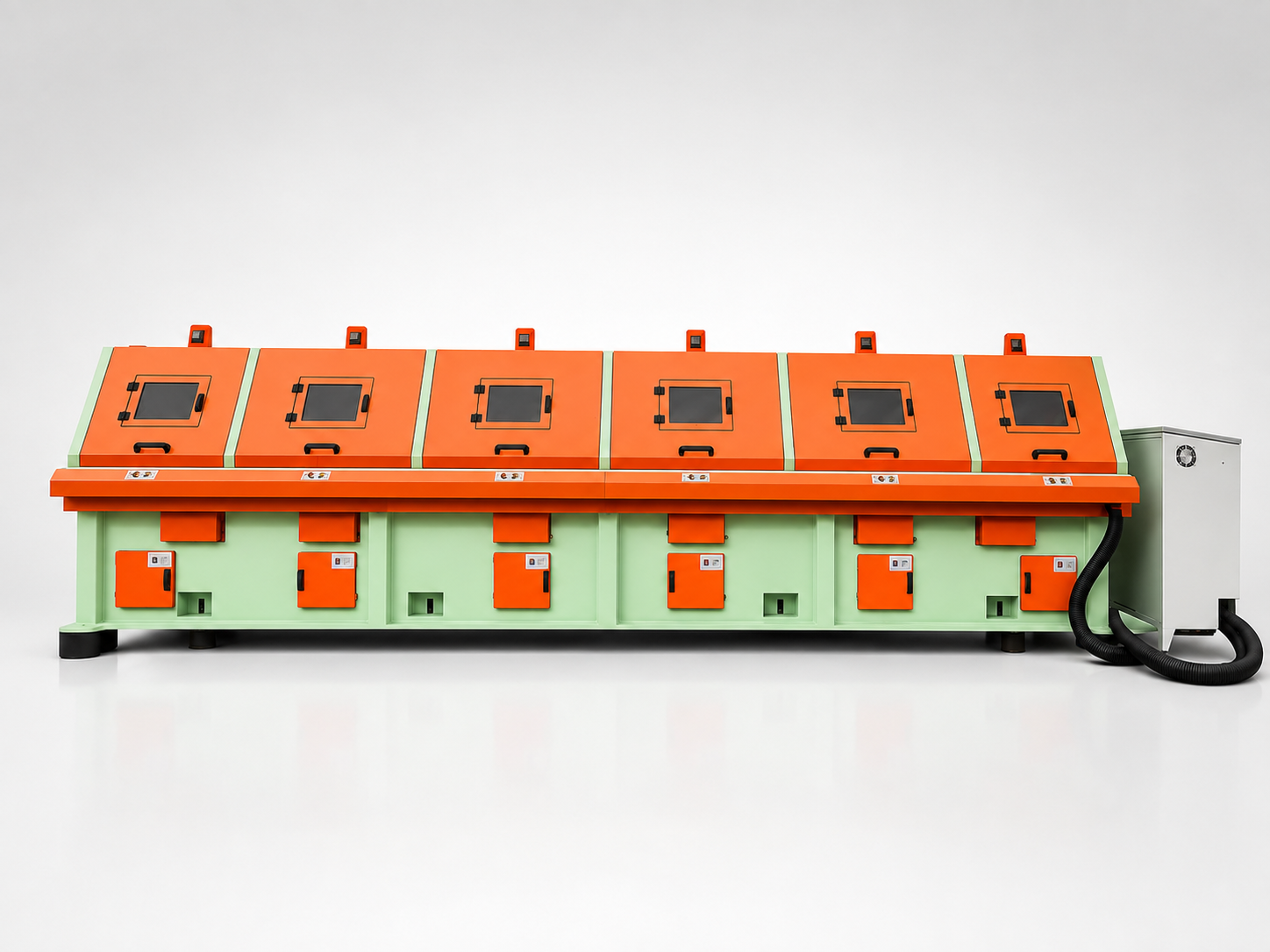
Purpose-Built for Uniform Round Tube Finishing
A round tube requires continuous and balanced polishing contact around its circumference. Tailiang equipment stabilizes the workpiece during feeding and applies controlled abrasive pressure to reduce uneven lines, missed areas and inconsistent manual results.
The machine can be configured for preliminary grinding, oxidation and scratch removal, surface refinement or decorative polishing. The appropriate layout depends on the material, tube diameter, defect condition, desired finish and production rate.
- Round tubes, pipes, rods and cylindrical parts
- Carbon steel, stainless steel and applicable alloys
- Adjustable for a defined diameter range
- Dry or process-specific finishing setup
- Manual loading or automatic feeding options
- Standalone or integrated production-line use
How the Round Tube Polishing Process Works
The system controls workpiece guidance, abrasive contact and feeding speed so the full tube circumference receives a repeatable finish.
Tube Loading & Alignment
The tube enters the guide and feed system, which maintains a stable centerline for consistent downstream contact.
Controlled Abrasive Contact
The selected polishing unit applies controlled pressure around the round surface according to the required stock removal.
Continuous Surface Processing
Coordinated feeding and workpiece motion expose the circumference evenly and reduce visible finish variation.
Finished Tube Discharge
The processed tube exits for inspection, packaging or transfer to the next manufacturing operation.
Designed for Stable Quality and Efficient Production
The machine architecture addresses the practical problems of hand polishing: variable pressure, inconsistent coverage, high labor input and limited batch repeatability.
Uniform 360° Finish
Controlled contact helps maintain a consistent appearance around the entire tube circumference.
Continuous Feeding
Stable material transport improves throughput and reduces repeated manual repositioning.
Repeatable Process Settings
Defined pressure, abrasive and feed settings make batch results easier to reproduce.
Flexible Diameter Range
The machine can be engineered around the minimum and maximum diameters used in your production.
Industrial Construction
A production-oriented structure supports stable operation under repeated tube-processing cycles.
Line Integration Options
Feeding, conveying, dust handling and adjacent operations can be evaluated as one workflow.
One Machine Family, Multiple Finishing Objectives
Machine configuration should follow the actual tube, material and target surface. Share sample images or workpieces so the abrasive sequence and station layout can be evaluated accurately.
Send Application DetailsStainless Steel Tubes
Refining and decorative finishing for sanitary pipe, furniture, railing and visible metal components.
Carbon Steel Pipes
Removal of oxidation, scale and surface defects before coating, assembly or further processing.
Architectural & Railing Tubes
Consistent visible finishes for handrails, balustrades, frames and exterior or interior metalwork.
Furniture & Fixture Tubing
Repeatable surface preparation for chairs, tables, display fixtures and commercial furniture components.
Scratch & Oxidation Removal
Controlled stock removal helps prepare tubes with handling marks, surface defects or oxidized layers.
Decorative Surface Finishing
Multi-stage processing can refine the surface toward an agreed brushed, satin or polished appearance.
Build the Machine Around Your Production Requirement
There is no single ideal configuration for every round tube. These factors determine the appropriate polishing architecture and quotation.
| Selection Item | Information to Provide | Configuration Impact |
|---|---|---|
| Tube Dimensions | Minimum and maximum outside diameter, wall thickness and workpiece length | Determines guide structure, adjustment range, contact geometry and material support. |
| Material | Stainless steel, carbon steel, aluminum or other alloy | Influences abrasive selection, contact pressure, heat control and expected surface response. |
| Incoming Surface | Oxidation, mill scale, scratches, weld marks or general roughness | Defines required stock removal and whether coarse-to-fine multiple stages are needed. |
| Target Finish | Cleaning, preparation, brushed, satin, refined or application-specific finish | Guides abrasive sequence, polishing media and number of processing stations. |
| Required Output | Pieces per hour, meters per minute, shift pattern and batch size | Determines feed system, motor and station layout, automation level and line integration. |
| Factory Conditions | Available footprint, power supply, dust collection and upstream/downstream equipment | Influences machine arrangement, enclosure, utility interface and installation planning. |
Application-Focused Equipment Support
The result depends on more than the machine body. Workpiece support, abrasive selection, station sequence and feed control must work together as one finishing process.
What to Send for a Faster Technical Recommendation
A complete inquiry helps the engineering team avoid assumptions and prepare a more useful machine proposal.
- Tube outside-diameter range, wall thickness and length
- Material grade and current surface condition
- Required visual finish or roughness target
- Expected production capacity and working hours
- Sample photos, drawings or physical workpieces if available
- Power supply, plant layout and dust-handling requirements
Round Tube Polishing Machine FAQs
Practical answers to the questions buyers commonly ask before requesting a detailed configuration.
The equipment is intended for round tubes, pipes, bars and suitable cylindrical parts. The exact diameter, wall-thickness and length range must be confirmed for the selected machine configuration.
Yes. The guide, feed and polishing-contact systems can be made adjustable within a defined range. Provide your minimum and maximum tube diameters so the working range and changeover method can be evaluated.
It can be configured for defect and oxidation removal, but the required abrasive and number of stages depend on defect depth, material and target finish. Photos or samples are recommended before final selection.
A single station may suit one defined operation. Multi-station systems are more appropriate when coarse defect removal, intermediate refinement and final finishing must be completed continuously at a higher output.
Automatic feeding, conveying, dust-extraction interfaces and connection with adjacent equipment can be evaluated according to the tube format, line speed, plant layout and automation target.
Please provide tube dimensions, material, incoming surface, required finish, production capacity, available power supply and any factory-layout constraints. This information allows a technically relevant configuration and quotation.
Get a Round Tube Polishing Solution Matched to Your Workpiece
Send your diameter range, tube length, material, surface condition, target finish and required capacity. Tailiang will recommend a practical machine layout and prepare a detailed quotation.